Selasa, 08 Maret 2011

[E244.Ebook] Free PDF The Glorious Cause: The American Revolution, 1763-1789 (Oxford History of the United States), by Robert Middlekauff

Free PDF The Glorious Cause: The American Revolution, 1763-1789 (Oxford History of the United States), by Robert Middlekauff

The Glorious Cause: The American Revolution, 1763-1789 (Oxford History Of The United States), By Robert Middlekauff. Reading makes you a lot better. Which states? Numerous sensible words claim that by reading, your life will certainly be much better. Do you think it? Yeah, prove it. If you require the book The Glorious Cause: The American Revolution, 1763-1789 (Oxford History Of The United States), By Robert Middlekauff to check out to confirm the smart words, you can visit this web page perfectly. This is the site that will certainly offer all guides that probably you need. Are the book's collections that will make you really feel interested to review? One of them below is the The Glorious Cause: The American Revolution, 1763-1789 (Oxford History Of The United States), By Robert Middlekauff that we will certainly suggest.

The Glorious Cause: The American Revolution, 1763-1789 (Oxford History of the United States), by Robert Middlekauff

The Glorious Cause: The American Revolution, 1763-1789 (Oxford History of the United States), by Robert Middlekauff


The Glorious Cause: The American Revolution, 1763-1789 (Oxford History of the United States), by Robert Middlekauff

Free PDF The Glorious Cause: The American Revolution, 1763-1789 (Oxford History of the United States), by Robert Middlekauff

New updated! The The Glorious Cause: The American Revolution, 1763-1789 (Oxford History Of The United States), By Robert Middlekauff from the very best author and also publisher is currently readily available right here. This is guide The Glorious Cause: The American Revolution, 1763-1789 (Oxford History Of The United States), By Robert Middlekauff that will certainly make your day reading becomes finished. When you are trying to find the printed book The Glorious Cause: The American Revolution, 1763-1789 (Oxford History Of The United States), By Robert Middlekauff of this title in the book store, you could not locate it. The problems can be the restricted editions The Glorious Cause: The American Revolution, 1763-1789 (Oxford History Of The United States), By Robert Middlekauff that are given in the book establishment.

This book The Glorious Cause: The American Revolution, 1763-1789 (Oxford History Of The United States), By Robert Middlekauff is expected to be one of the best vendor book that will make you really feel completely satisfied to acquire and also review it for finished. As known can usual, every publication will have specific points that will make somebody interested so much. Also it originates from the author, type, content, as well as the publisher. Nevertheless, many individuals also take the book The Glorious Cause: The American Revolution, 1763-1789 (Oxford History Of The United States), By Robert Middlekauff based upon the theme and title that make them impressed in. as well as below, this The Glorious Cause: The American Revolution, 1763-1789 (Oxford History Of The United States), By Robert Middlekauff is extremely advised for you considering that it has appealing title as well as style to read.

Are you actually a fan of this The Glorious Cause: The American Revolution, 1763-1789 (Oxford History Of The United States), By Robert Middlekauff If that's so, why do not you take this book now? Be the initial individual which such as and lead this book The Glorious Cause: The American Revolution, 1763-1789 (Oxford History Of The United States), By Robert Middlekauff, so you could obtain the factor as well as messages from this book. Never mind to be confused where to obtain it. As the various other, we discuss the link to see and download and install the soft data ebook The Glorious Cause: The American Revolution, 1763-1789 (Oxford History Of The United States), By Robert Middlekauff So, you could not bring the published publication The Glorious Cause: The American Revolution, 1763-1789 (Oxford History Of The United States), By Robert Middlekauff everywhere.

The visibility of the online book or soft data of the The Glorious Cause: The American Revolution, 1763-1789 (Oxford History Of The United States), By Robert Middlekauff will alleviate individuals to get guide. It will certainly likewise conserve even more time to only look the title or author or author to obtain till your book The Glorious Cause: The American Revolution, 1763-1789 (Oxford History Of The United States), By Robert Middlekauff is disclosed. After that, you could visit the link download to see that is given by this site. So, this will be an excellent time to begin enjoying this book The Glorious Cause: The American Revolution, 1763-1789 (Oxford History Of The United States), By Robert Middlekauff to review. Always great time with book The Glorious Cause: The American Revolution, 1763-1789 (Oxford History Of The United States), By Robert Middlekauff, constantly good time with cash to invest!

The Glorious Cause: The American Revolution, 1763-1789 (Oxford History of the United States), by Robert Middlekauff

The first book to appear in the illustrious Oxford History of the United States, this critically acclaimed volume--a finalist for the Pulitzer Prize--offers an unsurpassed history of the Revolutionary War and the birth of the American republic.

Beginning with the French and Indian War and continuing to the election of George Washington as first president, Robert Middlekauff offers a panoramic history of the conflict between England and America, highlighting the drama and anguish of the colonial struggle for independence. Combining the political and the personal, he provides a compelling account of the key events that precipitated the war, from the Stamp Act to the Tea Act, tracing the gradual gathering of American resistance that culminated in the Boston Tea Party and "the shot heard 'round the world." The heart of the book features a vivid description of the eight-year-long war, with gripping accounts of battles and campaigns, ranging from Bunker Hill and Washington's crossing of the Delaware to the brilliant victory at Hannah's Cowpens and the final triumph at Yorktown, paying particular attention to what made men fight in these bloody encounters. The book concludes with an insightful look at the making of the Constitution in the Philadelphia Convention of 1787 and the struggle over ratification. Through it all, Middlekauff gives the reader a vivid sense of how the colonists saw these events and the importance they gave to them. Common soldiers and great generals, Sons of Liberty and African slaves, town committee-men and representatives in congress--all receive their due. And there are particularly insightful portraits of such figures as Sam and John Adams, James Otis, Thomas Jefferson, George Washington, and many others.

This new edition has been revised and expanded, with fresh coverage of topics such as mob reactions to British measures before the War, military medicine, women's role in the Revolution, American Indians, the different kinds of war fought by the Americans and the British, and the ratification of the Constitution. The book also has a new epilogue and an updated bibliography.

The cause for which the colonists fought, liberty and independence, was glorious indeed. Here is an equally glorious narrative of an event that changed the world, capturing the profound and passionate struggle to found a free nation.

The Oxford History of the United States
The Oxford History of the United States is the most respected multi-volume history of our nation. The series includes three Pulitzer Prize winners, a New York Times bestseller, and winners of the Bancroft and Parkman Prizes. The Atlantic Monthly has praised it as "the most distinguished series in American historical scholarship," a series that "synthesizes a generation's worth of historical inquiry and knowledge into one literally state-of-the-art book." Conceived under the general editorship of C. Vann Woodward and Richard Hofstadter, and now under the editorship of David M. Kennedy, this renowned series blends social, political, economic, cultural, diplomatic, and military history into coherent and vividly written narrative.

  • Sales Rank: #24377 in Books
  • Brand: Oxford University Press
  • Published on: 2007-03-09
  • Released on: 2007-03-09
  • Original language: English
  • Number of items: 1
  • Dimensions: 6.00" h x 2.20" w x 9.20" l, 2.28 pounds
  • Binding: Paperback
  • 752 pages
Features
  • The Glorious Cause: The American Revolution, 1763-1789 (Oxford History of the United States)

Review

Finalist, Pulitzer Prize for History


"This is narrative history at its best, written in a conversational and engaging style.... A major revision and expansion of a popular history of the American Revolutionary period."--Library Journal


"A tour de force. Middlekauff has the admirable ability to capture historical truths in vivid images and memorable phrases.... Middlekauff's empathy enhances this massive book's cumulative power. The cause was glorious; the book is too."--Dennis Drabelle, Washington Post Book World


"The reader in search of a wide-ranging overview of the Revolution would be better off turning to any number of earlier books (from Trevelyan's classic 'American Revolution' to more recent works like 'The Glorious Cause' by Robert Middlekauff)."--Michiko Kakutani, The New York Times, in a review of 1776


Acclaim for the First Edition:
"One of the best one-volume accounts of the Revolutionary war."--The New York Times

"A striking success. Middlekauff is both elegant and eloquent. Whether he is describing the making of British policy, or sketching the character of Washington or Pitt, or explaining why Daniel Morgan positioned the American troops at Hannah's Cowpens so retreat would be impossible, he does in a few paragraphs or pages what others might struggle through a chapter to get right."--The New Republic

"A first-class narrative history. There is probably no history of the Revolution that better combines a full account of the military course of the war with consideration of all the other forces shaping the era." --The Philadelphia Inquirer


"Middlekauff's energy and clarity often make us read as eagerly as if we did not know how this struggle will come out."--The New Yorker

"Writing with a grace and clarity that recall Samuel Eliot Morison, Middlekauff gives us classic entry into the critical period of American history." --The Los Angeles Times

"His narrative account goes along at a fast pace. He moves with agility from profound political and philosophical disputes of the period to the scenes of battle and the problems of military strategy. A welcome addition to the history of the Revolution." --The Washington Post Book World


"First-rate narrative history--one can hardly imagine a better one-volume introduction to the period. Graced with plentiful illustrations, gracefully written and long enough (at nearly 700 pages) to afford ample attention to detail, this book is highly recommended to the general reader." --Newsday


"A tour de force. Middlekauff has the admirable ability to capture historical truths in vivid images and memorable phrases.... Middlekauff's empathy enhances this massive book's cumulative power. The cause was glorious; the book is too."--Dennis Drabelle, Washington Post Book World


"This is narrative history at its best, written in a conversational and engaging style.... A major revision and expansion of a popular history of the American Revolutionary period."--Library Journal


"The reader in search of a wide-ranging overview of the Revolution would be better off turning to any number of earlier books (from Trevelyan's classic 'American Revolution' to more recent works like 'The Glorious Cause' by Robert Middlekauff)."--Michiko Kakutani, The New York Times, in a review of 1776


About the Author

Robert Middlekauff is Preston Hotchkis Professor of American History Emeritus at the University of California, Berkeley. The winner of a Bancroft Prize for The Mathers, he was Harmsworth Professor of American History at Oxford University and also served as Director of the Huntington Library, Art Gallery, and Botanical Gardens.

Most helpful customer reviews

5 of 5 people found the following review helpful.
Insightful
By Jason
This book takes a rather sharp needle to an era of history that has, probably with good reason, become more legend than actual knowledge. We Americans treasure a certain mythic story line about the Revolution and the people who fought in it. It's been taught to us in school, shown on TV, and referenced by politicians of every stripe.

What this book does, and does it well, is strip those myths away. This isn't to say that this bashes America, Americans, or any particular group, but it does go to great lengths to show that the Revolution came as a surprise to many, even those who normally could be considered in charge of it. Great Britain was not the tyrannical bad guy as often made out to be, but rather a government who failed to heed what was happening. If anything, what surprised me the most about this book was just how NOT inevitable the Revolution was. Hindsight being 20/20 and all that, but many times I was reading and thinking 'If they had just stepped back...' What a difference that would have made to history.

As said, this shows the fledgling country for what it was, disunited, prideful, religious, secular, strong, weak, and with factions that more often than not got in the way of doing what was best for the country instead of helping it, but each convinced that what they were doing WAS the best. Everyone else though... If anything can be taken away from this book, besides a good understanding on just how we got started, it's the lesson that many of the same problems that now beset the United States of America in 2015 that everyone is currently convinced will be the end of us, were more than present in 1776 at the beginning of us. Depending on how you look at it, that could be a good, or a bad, thing.

7 of 7 people found the following review helpful.
An outstanding reference book and quite useful starting point for the Revolutionary era of American History
By gloine36
Robert Middlekauff’s 1982 contribution to the Oxford History of the United States was the inaugural volume of the series. It was a nominee for the Pulitzer Prize and was extensively overhauled in 2005 for an updated second edition. Middlekauff’s work has been a wonderful addition to any library that covers any part of the American Revolution. As with any event in history, the exploration of its roots are critical to understanding why it occurred and in the way it did. Middlekauff devoted the first third of the volume covering those roots and the years leading up to 1775 before the opening fight at Lexington and Concord. This is very important because there has always been a very large question concerning how quickly the American colonists changed from loyal supporters of the British crown and British citizens to disloyal rebels and American patriots.

The themes of pre-revolutionary American are explored along political, social, and religious lines as well as economic. How these themes converged to explode into the Revolution is to understand the ideology of the Revolution itself. This work came out during the years when historians like Bailyn and Wood were concerned with the political ideology and focused on the Republicanism that emerged from those colliding themes. Middlekauf did not devote many pages to social, cultural, gender, or class issues in the first edition, but did include them in the revised second edition which revitalized the book and refreshed it. As a result, the second edition retains its place as an outstanding contribution to Revolutionary history and has not become dated by newer historiography like so many other comprehensive works have become.

Once Middlekauff arrives in the War for Independence the volume settles down to mainly political and military histories, although the second edition expands on women’s roles in the conflict and American Indians while also expanding on developments leading to the creation of the Constitution in 1787. I was a bit disappointed in the familiar assertion that the American victory at Saratoga had a direct impact on France signing the Franco-American Alliance treaty rather than the fact that the French had been preparing to enter the war as soon as they could convince Spain to join the alliance and they spent 1777 preparing the French fleet for war. However, this is a common theme in revolutionary history and one which historians often disagree. In any event, Middlekauff definitely highlighted the important role the French played throughout the Revolution.

By this point of the war the British had began to realize that the conflict had become a global one which had major strategic problems for them. In hindsight it became obvious that their lack of planning and unwillingness to escalate the forces required for victory or understand the scale of the conflict had played major roles in their eventual failure to successfully resolve the situation. With France in the war, Britain regulated the North American colonies to a sideshow and focused on maintaining what it felt were more lucrative colonies in its empire. Middlekauff definitely points this out and how this new strategy completely altered the war’s aims. As many historians have pointed out, the results of the war were not inevitable and at any point had American forces not won some of the battles that they did win from 1778 onward, the results could have been very different from what did transpire.

I was happy with the two chapters that were heavily edited for the new edition concerning inside and outside the campaigns. The role of smallpox in the war was often overlooked for years, but historians have concluded that inoculation of American troops may very well have been one of the most important decisions Washington made during the entire military phase of the war. In addition, Middlekauff painted an update picture of both that decision and how troops experienced the war. This is an expansion of the more modern bottom up view of the Revolution. I think this is important too because it helps negate the old interpretation that the Revolution’s outcome was a Providential event. By exploring the many small details that influenced the events of the conflict Middlekauff is able to show that the final outcome of the conflict had far more to do with logistics than with Providence.

There was no possible way for Middlekauff to explore in great detail every aspect of the period that he covered without writing several volumes and employing a small company of historians and researchers. The era is just too vast. However, as a volume that highlights the important themes and events that transpired in that time, he is able to deliver a fine body of work that should whet the appetite of anyone interested in the broader overview of the Revolution. At the same time, his sources can be used as a launching point to a greater exploration of particular interest for any reader. The volume is quite useful for a survey class on the subject and can form the backbone text for that class when supplemented by primary sources and additional readings to reinforce it. As such, it has found a home in my library and has been used in my own research on the period as a starting point on multiple occasions. It is a worthy entry and a handy reference.

2 of 2 people found the following review helpful.
Not an enjoyable read
By John
Kind of bummed about this one. I am a big history book fan and hadn't bought/read anything on the American Revolution in quite awhile and wanted something written somewhat recently so I picked this. I have read several books on the subject as well as the popular historical biographies that started popping up 10-15 years or so ago, so I wasn't looking for an introductory book. But this thing is a grind. Believe the reviews that say it reads like a text book. I am barely into it and want to like it but it is grueling and I keep backtracking and re-reading and putting it down often and wanting to quit. I shouldn't feel like I should get 3 college credits if I get through this thing, but I do. It reminded me of H.W. Brands book on Benjamin Franklin. Not the read I was hoping for. Luckily I know how it ends. I started Angel in the Whirlwind after this and find it much easier going and pretty detailed and substantive.

See all 190 customer reviews...

The Glorious Cause: The American Revolution, 1763-1789 (Oxford History of the United States), by Robert Middlekauff PDF
The Glorious Cause: The American Revolution, 1763-1789 (Oxford History of the United States), by Robert Middlekauff EPub
The Glorious Cause: The American Revolution, 1763-1789 (Oxford History of the United States), by Robert Middlekauff Doc
The Glorious Cause: The American Revolution, 1763-1789 (Oxford History of the United States), by Robert Middlekauff iBooks
The Glorious Cause: The American Revolution, 1763-1789 (Oxford History of the United States), by Robert Middlekauff rtf
The Glorious Cause: The American Revolution, 1763-1789 (Oxford History of the United States), by Robert Middlekauff Mobipocket
The Glorious Cause: The American Revolution, 1763-1789 (Oxford History of the United States), by Robert Middlekauff Kindle

The Glorious Cause: The American Revolution, 1763-1789 (Oxford History of the United States), by Robert Middlekauff PDF

The Glorious Cause: The American Revolution, 1763-1789 (Oxford History of the United States), by Robert Middlekauff PDF

The Glorious Cause: The American Revolution, 1763-1789 (Oxford History of the United States), by Robert Middlekauff PDF

Jumat, 04 Maret 2011

[G584.Ebook] Free PDF Pro OGRE 3D Programming (Expert's Voice in Open Source)

Free PDF Pro OGRE 3D Programming (Expert's Voice in Open Source)

On top of that, we will certainly discuss you the book Pro OGRE 3D Programming (Expert's Voice In Open Source) in soft documents kinds. It will not disturb you making heavy of you bag. You require only computer gadget or gadget. The link that we offer in this site is available to click then download this Pro OGRE 3D Programming (Expert's Voice In Open Source) You recognize, having soft data of a book Pro OGRE 3D Programming (Expert's Voice In Open Source) to be in your device can make alleviate the viewers. So in this manner, be an excellent reader currently!

Pro OGRE 3D Programming (Expert's Voice in Open Source)

Pro OGRE 3D Programming (Expert's Voice in Open Source)


Pro OGRE 3D Programming (Expert's Voice in Open Source)

Free PDF Pro OGRE 3D Programming (Expert's Voice in Open Source)

Do you think that reading is an important task? Discover your factors why adding is essential. Reviewing an e-book Pro OGRE 3D Programming (Expert's Voice In Open Source) is one part of pleasurable activities that will make your life top quality much better. It is not concerning simply what kind of e-book Pro OGRE 3D Programming (Expert's Voice In Open Source) you check out, it is not simply about the number of e-books you review, it has to do with the behavior. Reading habit will certainly be a means to make book Pro OGRE 3D Programming (Expert's Voice In Open Source) as her or his close friend. It will regardless of if they spend money and also invest more books to complete reading, so does this publication Pro OGRE 3D Programming (Expert's Voice In Open Source)

As known, journey and experience regarding driving lesson, home entertainment, as well as expertise can be acquired by just checking out a book Pro OGRE 3D Programming (Expert's Voice In Open Source) Also it is not directly done, you can recognize even more concerning this life, about the world. We provide you this appropriate and also very easy means to obtain those all. We offer Pro OGRE 3D Programming (Expert's Voice In Open Source) and many book collections from fictions to scientific research in any way. One of them is this Pro OGRE 3D Programming (Expert's Voice In Open Source) that can be your partner.

Exactly what should you assume more? Time to obtain this Pro OGRE 3D Programming (Expert's Voice In Open Source) It is easy after that. You can just rest and remain in your area to get this publication Pro OGRE 3D Programming (Expert's Voice In Open Source) Why? It is on-line publication establishment that offer many compilations of the referred publications. So, simply with internet connection, you could delight in downloading this publication Pro OGRE 3D Programming (Expert's Voice In Open Source) and varieties of books that are looked for now. By seeing the link web page download that we have actually given, the book Pro OGRE 3D Programming (Expert's Voice In Open Source) that you refer so much can be discovered. Simply conserve the requested book downloaded and after that you can take pleasure in the book to read each time as well as area you really want.

It is really simple to check out the book Pro OGRE 3D Programming (Expert's Voice In Open Source) in soft data in your gizmo or computer. Once more, why need to be so difficult to get guide Pro OGRE 3D Programming (Expert's Voice In Open Source) if you can pick the much easier one? This internet site will relieve you to select as well as pick the very best collective books from one of the most needed vendor to the launched publication recently. It will certainly always upgrade the collections time to time. So, link to internet and also see this site always to obtain the brand-new book every day. Now, this Pro OGRE 3D Programming (Expert's Voice In Open Source) is all yours.

Pro OGRE 3D Programming (Expert's Voice in Open Source)

  • Published on: 1702
  • Binding: Hardcover

Most helpful customer reviews

See all customer reviews...

Pro OGRE 3D Programming (Expert's Voice in Open Source) PDF
Pro OGRE 3D Programming (Expert's Voice in Open Source) EPub
Pro OGRE 3D Programming (Expert's Voice in Open Source) Doc
Pro OGRE 3D Programming (Expert's Voice in Open Source) iBooks
Pro OGRE 3D Programming (Expert's Voice in Open Source) rtf
Pro OGRE 3D Programming (Expert's Voice in Open Source) Mobipocket
Pro OGRE 3D Programming (Expert's Voice in Open Source) Kindle

Pro OGRE 3D Programming (Expert's Voice in Open Source) PDF

Pro OGRE 3D Programming (Expert's Voice in Open Source) PDF

Pro OGRE 3D Programming (Expert's Voice in Open Source) PDF

Kamis, 03 Maret 2011

[S941.Ebook] PDF Download Infrastructure Public-Private Partnerships: Decision, Management and Development, by Carlos Oliveira Cruz, Rui Cunha Marques

PDF Download Infrastructure Public-Private Partnerships: Decision, Management and Development, by Carlos Oliveira Cruz, Rui Cunha Marques

As known, numerous individuals say that books are the home windows for the world. It does not indicate that buying publication Infrastructure Public-Private Partnerships: Decision, Management And Development, By Carlos Oliveira Cruz, Rui Cunha Marques will mean that you could get this world. Just for joke! Checking out a publication Infrastructure Public-Private Partnerships: Decision, Management And Development, By Carlos Oliveira Cruz, Rui Cunha Marques will opened someone to assume far better, to maintain smile, to entertain themselves, as well as to encourage the knowledge. Every e-book also has their characteristic to affect the viewers. Have you understood why you read this Infrastructure Public-Private Partnerships: Decision, Management And Development, By Carlos Oliveira Cruz, Rui Cunha Marques for?

Infrastructure Public-Private Partnerships: Decision, Management and Development, by Carlos Oliveira Cruz, Rui Cunha Marques

Infrastructure Public-Private Partnerships: Decision, Management and Development, by Carlos Oliveira Cruz, Rui Cunha Marques


Infrastructure Public-Private Partnerships: Decision, Management and Development, by Carlos Oliveira Cruz, Rui Cunha Marques

PDF Download Infrastructure Public-Private Partnerships: Decision, Management and Development, by Carlos Oliveira Cruz, Rui Cunha Marques

Find the trick to enhance the quality of life by reading this Infrastructure Public-Private Partnerships: Decision, Management And Development, By Carlos Oliveira Cruz, Rui Cunha Marques This is a sort of publication that you require now. Besides, it can be your favored publication to review after having this publication Infrastructure Public-Private Partnerships: Decision, Management And Development, By Carlos Oliveira Cruz, Rui Cunha Marques Do you ask why? Well, Infrastructure Public-Private Partnerships: Decision, Management And Development, By Carlos Oliveira Cruz, Rui Cunha Marques is a publication that has different characteristic with others. You might not need to understand that the writer is, exactly how popular the work is. As wise word, never evaluate the words from which talks, yet make the words as your inexpensive to your life.

Reviewing routine will certainly constantly lead individuals not to pleased reading Infrastructure Public-Private Partnerships: Decision, Management And Development, By Carlos Oliveira Cruz, Rui Cunha Marques, an e-book, ten publication, hundreds publications, and also much more. One that will certainly make them really feel satisfied is finishing reviewing this book Infrastructure Public-Private Partnerships: Decision, Management And Development, By Carlos Oliveira Cruz, Rui Cunha Marques and getting the notification of guides, then discovering the other following e-book to review. It continues an increasing number of. The time to finish reviewing a book Infrastructure Public-Private Partnerships: Decision, Management And Development, By Carlos Oliveira Cruz, Rui Cunha Marques will certainly be always numerous relying on spar time to invest; one instance is this Infrastructure Public-Private Partnerships: Decision, Management And Development, By Carlos Oliveira Cruz, Rui Cunha Marques

Now, how do you recognize where to acquire this publication Infrastructure Public-Private Partnerships: Decision, Management And Development, By Carlos Oliveira Cruz, Rui Cunha Marques Don't bother, now you could not go to the book establishment under the bright sunlight or night to browse guide Infrastructure Public-Private Partnerships: Decision, Management And Development, By Carlos Oliveira Cruz, Rui Cunha Marques We below constantly help you to discover hundreds type of publication. Among them is this book entitled Infrastructure Public-Private Partnerships: Decision, Management And Development, By Carlos Oliveira Cruz, Rui Cunha Marques You could go to the web link web page given in this set and after that choose downloading. It will certainly not take even more times. Merely link to your web gain access to as well as you can access the publication Infrastructure Public-Private Partnerships: Decision, Management And Development, By Carlos Oliveira Cruz, Rui Cunha Marques on-line. Of training course, after downloading and install Infrastructure Public-Private Partnerships: Decision, Management And Development, By Carlos Oliveira Cruz, Rui Cunha Marques, you might not print it.

You can save the soft documents of this e-book Infrastructure Public-Private Partnerships: Decision, Management And Development, By Carlos Oliveira Cruz, Rui Cunha Marques It will certainly rely on your spare time and also activities to open up and review this publication Infrastructure Public-Private Partnerships: Decision, Management And Development, By Carlos Oliveira Cruz, Rui Cunha Marques soft data. So, you could not hesitate to bring this e-book Infrastructure Public-Private Partnerships: Decision, Management And Development, By Carlos Oliveira Cruz, Rui Cunha Marques almost everywhere you go. Just add this sot documents to your device or computer system disk to allow you read every single time and almost everywhere you have time.

Infrastructure Public-Private Partnerships: Decision, Management and Development, by Carlos Oliveira Cruz, Rui Cunha Marques

This guide to Public-Private Partnerships contract management explores the concept of flexible contracts and the uncertainty modeling for improving the robustness of the decision-making process. It also includes a detailed analysis of renegotiation patterns.

  • Sales Rank: #8470460 in Books
  • Published on: 2015-06-16
  • Released on: 2015-06-16
  • Original language: English
  • Number of items: 1
  • Dimensions: 9.25" h x .44" w x 6.10" l, .61 pounds
  • Binding: Paperback
  • 171 pages

From the Back Cover

Economic development and social welfare depend on the existence of effective and efficient infrastructure systems, particularly in health, energy, transportation and water, many of which are developed and managed through Public-Private Partnerships (PPPs). However, empirical evidence suggests some pitfalls in the use of these PPP arrangements.

This book addresses these issues, focusing on mostly three key questions: How to improve the robustness of the decision-making process leading to the option of PPP? How to improve contract management as the longest phase of the process? How can contracts be improved to accommodate uncertainty and avoid harmful renegotiations? The authors explore the concept of flexible contracts, the uncertainty modeling for improving the robustness of the decision-making process, and develop an overall framework for effective contract management, along with a comprehensive analysis of current renegotiation patterns.�The ultimate goal is to improve the contractual performance, as well as the overall infrastructure management and social welfare.�​

About the Author

Carlos Oliveira Cruz, PhD in Civil Engineering, MSc in Transportation and holds a BSc in Civil Engineering. He is Assistant Professor at the Department of Civil Engineering and Architecture at Instituto Superior T�cnico (IST), Technical University of Lisbon, Portugal and researcher at ICIST. He was a Visiting Scholar at the John F. Kennedy School of Government (Harvard University) in 2011. In 2005 and 2006 he served as advisor to the Portuguese Secretary of State for Transportation and between 2007 and 2009 he was a consultant in several PPP projects.

Rui Cunha Marques, PhD. MSc. BSc. Associate Professor at the Engineering and Management Department at Instituto Superior T�cnico (IST), Technical University of Lisbon, in Portugal. Research member of the Centre for Management Studies (CEG-IST) and a Senior Research Associate of Public Utility Research Centre (PURC) at the University of Florida. His areas of interest include regulation, performance and procurement in infrastructure, particularly in public utilities and transportation. He has published several dozens of papers in international journals, and several books on regulation. He has been an international consultant on PPPs and regulation.

Most helpful customer reviews

See all customer reviews...

Infrastructure Public-Private Partnerships: Decision, Management and Development, by Carlos Oliveira Cruz, Rui Cunha Marques PDF
Infrastructure Public-Private Partnerships: Decision, Management and Development, by Carlos Oliveira Cruz, Rui Cunha Marques EPub
Infrastructure Public-Private Partnerships: Decision, Management and Development, by Carlos Oliveira Cruz, Rui Cunha Marques Doc
Infrastructure Public-Private Partnerships: Decision, Management and Development, by Carlos Oliveira Cruz, Rui Cunha Marques iBooks
Infrastructure Public-Private Partnerships: Decision, Management and Development, by Carlos Oliveira Cruz, Rui Cunha Marques rtf
Infrastructure Public-Private Partnerships: Decision, Management and Development, by Carlos Oliveira Cruz, Rui Cunha Marques Mobipocket
Infrastructure Public-Private Partnerships: Decision, Management and Development, by Carlos Oliveira Cruz, Rui Cunha Marques Kindle

Infrastructure Public-Private Partnerships: Decision, Management and Development, by Carlos Oliveira Cruz, Rui Cunha Marques PDF

Infrastructure Public-Private Partnerships: Decision, Management and Development, by Carlos Oliveira Cruz, Rui Cunha Marques PDF

Infrastructure Public-Private Partnerships: Decision, Management and Development, by Carlos Oliveira Cruz, Rui Cunha Marques PDF

[P897.Ebook] Get Free Ebook Changing: essays in art criticism, by Lucy R. Lippard

Get Free Ebook Changing: essays in art criticism, by Lucy R. Lippard

Considering that e-book Changing: Essays In Art Criticism, By Lucy R. Lippard has terrific benefits to review, lots of individuals now increase to have reading behavior. Sustained by the established technology, nowadays, it is simple to download guide Changing: Essays In Art Criticism, By Lucy R. Lippard Also the publication is not alreadied existing yet out there, you to hunt for in this web site. As exactly what you could discover of this Changing: Essays In Art Criticism, By Lucy R. Lippard It will actually relieve you to be the initial one reading this e-book Changing: Essays In Art Criticism, By Lucy R. Lippard as well as get the advantages.

Changing: essays in art criticism, by Lucy R. Lippard

Changing: essays in art criticism, by Lucy R. Lippard


Changing: essays in art criticism, by Lucy R. Lippard

Get Free Ebook Changing: essays in art criticism, by Lucy R. Lippard

Changing: Essays In Art Criticism, By Lucy R. Lippard. Offer us 5 minutes and we will reveal you the very best book to check out today. This is it, the Changing: Essays In Art Criticism, By Lucy R. Lippard that will certainly be your best option for much better reading book. Your five times will certainly not spend lost by reading this website. You could take the book as a resource making better idea. Referring guides Changing: Essays In Art Criticism, By Lucy R. Lippard that can be positioned with your needs is at some time challenging. But here, this is so very easy. You can find the most effective thing of book Changing: Essays In Art Criticism, By Lucy R. Lippard that you can check out.

This letter might not affect you to be smarter, but guide Changing: Essays In Art Criticism, By Lucy R. Lippard that our company offer will stimulate you to be smarter. Yeah, at least you'll recognize greater than others which do not. This is just what called as the top quality life improvisation. Why needs to this Changing: Essays In Art Criticism, By Lucy R. Lippard It's due to the fact that this is your favourite motif to check out. If you like this Changing: Essays In Art Criticism, By Lucy R. Lippard style about, why do not you read the book Changing: Essays In Art Criticism, By Lucy R. Lippard to improve your discussion?

Today book Changing: Essays In Art Criticism, By Lucy R. Lippard we offer right here is not kind of usual book. You recognize, reading currently doesn't imply to handle the published book Changing: Essays In Art Criticism, By Lucy R. Lippard in your hand. You can get the soft documents of Changing: Essays In Art Criticism, By Lucy R. Lippard in your gizmo. Well, we mean that guide that we proffer is the soft documents of the book Changing: Essays In Art Criticism, By Lucy R. Lippard The content and all things are exact same. The difference is only the kinds of guide Changing: Essays In Art Criticism, By Lucy R. Lippard, whereas, this condition will specifically be profitable.

We discuss you additionally the means to obtain this book Changing: Essays In Art Criticism, By Lucy R. Lippard without going to the book store. You could remain to check out the web link that we provide and also prepared to download Changing: Essays In Art Criticism, By Lucy R. Lippard When many people are hectic to seek fro in the book store, you are very simple to download the Changing: Essays In Art Criticism, By Lucy R. Lippard here. So, what else you will go with? Take the inspiration here! It is not only giving the right book Changing: Essays In Art Criticism, By Lucy R. Lippard yet additionally the ideal book collections. Here we always provide you the best as well as most convenient means.

Changing: essays in art criticism, by Lucy R. Lippard

  • Sales Rank: #9721212 in Books
  • Published on: 1971
  • Binding: Unknown Binding

Most helpful customer reviews

See all customer reviews...

Changing: essays in art criticism, by Lucy R. Lippard PDF
Changing: essays in art criticism, by Lucy R. Lippard EPub
Changing: essays in art criticism, by Lucy R. Lippard Doc
Changing: essays in art criticism, by Lucy R. Lippard iBooks
Changing: essays in art criticism, by Lucy R. Lippard rtf
Changing: essays in art criticism, by Lucy R. Lippard Mobipocket
Changing: essays in art criticism, by Lucy R. Lippard Kindle

Changing: essays in art criticism, by Lucy R. Lippard PDF

Changing: essays in art criticism, by Lucy R. Lippard PDF

Changing: essays in art criticism, by Lucy R. Lippard PDF

Rabu, 02 Maret 2011

[S129.Ebook] Free PDF A Spy Among Friends: Kim Philby and the Great Betrayal, by Ben Macintyre

Free PDF A Spy Among Friends: Kim Philby and the Great Betrayal, by Ben Macintyre

So, simply be here, find the e-book A Spy Among Friends: Kim Philby And The Great Betrayal, By Ben Macintyre now as well as check out that quickly. Be the first to read this book A Spy Among Friends: Kim Philby And The Great Betrayal, By Ben Macintyre by downloading and install in the web link. We have some various other e-books to review in this internet site. So, you can discover them also effortlessly. Well, now we have actually done to supply you the very best publication to check out today, this A Spy Among Friends: Kim Philby And The Great Betrayal, By Ben Macintyre is truly ideal for you. Never ever dismiss that you need this publication A Spy Among Friends: Kim Philby And The Great Betrayal, By Ben Macintyre to make better life. On the internet e-book A Spy Among Friends: Kim Philby And The Great Betrayal, By Ben Macintyre will truly provide very easy of everything to check out as well as take the advantages.

A Spy Among Friends: Kim Philby and the Great Betrayal, by Ben Macintyre

A Spy Among Friends: Kim Philby and the Great Betrayal, by Ben Macintyre


A Spy Among Friends: Kim Philby and the Great Betrayal, by Ben Macintyre

Free PDF A Spy Among Friends: Kim Philby and the Great Betrayal, by Ben Macintyre

Just how a suggestion can be got? By looking at the celebrities? By visiting the sea as well as looking at the sea weaves? Or by reading a publication A Spy Among Friends: Kim Philby And The Great Betrayal, By Ben Macintyre Everybody will certainly have certain characteristic to obtain the motivation. For you which are passing away of books and also always get the inspirations from books, it is truly excellent to be below. We will certainly show you hundreds collections of the book A Spy Among Friends: Kim Philby And The Great Betrayal, By Ben Macintyre to review. If you such as this A Spy Among Friends: Kim Philby And The Great Betrayal, By Ben Macintyre, you could likewise take it as yours.

In some cases, reading A Spy Among Friends: Kim Philby And The Great Betrayal, By Ben Macintyre is very dull and also it will certainly take long period of time starting from obtaining the book as well as begin reading. Nonetheless, in modern-day period, you could take the developing innovation by making use of the web. By internet, you can visit this web page and also begin to hunt for the book A Spy Among Friends: Kim Philby And The Great Betrayal, By Ben Macintyre that is required. Wondering this A Spy Among Friends: Kim Philby And The Great Betrayal, By Ben Macintyre is the one that you need, you could choose downloading and install. Have you recognized ways to get it?

After downloading the soft data of this A Spy Among Friends: Kim Philby And The Great Betrayal, By Ben Macintyre, you can begin to review it. Yeah, this is so delightful while somebody should check out by taking their large publications; you are in your brand-new method by just handle your gizmo. And even you are operating in the office; you could still utilize the computer system to read A Spy Among Friends: Kim Philby And The Great Betrayal, By Ben Macintyre completely. Certainly, it will certainly not obligate you to take lots of web pages. Merely web page by page depending on the time that you have to read A Spy Among Friends: Kim Philby And The Great Betrayal, By Ben Macintyre

After knowing this quite easy method to read and get this A Spy Among Friends: Kim Philby And The Great Betrayal, By Ben Macintyre, why don't you tell to others concerning through this? You can inform others to visit this internet site and also opt for searching them preferred books A Spy Among Friends: Kim Philby And The Great Betrayal, By Ben Macintyre As known, right here are great deals of listings that offer lots of kinds of books to gather. Merely prepare few time and web connections to get guides. You can actually delight in the life by checking out A Spy Among Friends: Kim Philby And The Great Betrayal, By Ben Macintyre in a quite easy manner.

A Spy Among Friends: Kim Philby and the Great Betrayal, by Ben Macintyre

Master storyteller Ben Macintyre’s most ambitious work to date brings to life the�twentieth century’s greatest spy story.


Kim Philby was the greatest spy in history, a brilliant and charming man who rose to head Britain’s counterintelligence against the Soviet Union during the height of the Cold War—while he was secretly working for the enemy. And nobody thought he knew Philby like Nicholas Elliott, Philby’s best friend and fellow officer in MI6. The two men had gone to the same schools, belonged to the same exclusive clubs, grown close through the crucible of wartime intelligence work and long nights of drink and revelry. It was madness for one to think the other might be a communist spy, bent on subverting Western values and the power of the free world.

But Philby was secretly betraying his friend. Every word Elliott breathed to Philby was transmitted back to Moscow—and not just Elliott’s words, for in America, Philby had made another powerful friend: James Jesus Angleton, the crafty, paranoid head of CIA counterintelligence. Angleton's and Elliott’s unwitting disclosures helped Philby sink almost every�important Anglo-American spy operation for twenty years, leading countless operatives to their doom. Even as the web of suspicion closed around him, and Philby was driven to greater lies to protect his cover, his two friends never abandoned him—until it was too late. The stunning truth of his betrayal would have devastating consequences on the two men who thought they knew him best, and on the intelligence services he left crippled in his wake.

Told with heart-pounding suspense and keen psychological insight, and based on personal papers and never-before-seen British intelligence files, A Spy Among Friends is Ben Macintyre’s best book yet, a high-water mark in Cold War history telling.


From the Hardcover edition.

  • Sales Rank: #17931 in Books
  • Brand: MacIntyre, Ben/ Le Carre, John (AFT)
  • Published on: 2015-05-12
  • Released on: 2015-05-12
  • Original language: English
  • Number of items: 1
  • Dimensions: 8.00" h x 1.10" w x 5.20" l, .0 pounds
  • Binding: Paperback
  • 384 pages

Review
New York Times Bestseller

New York Times Book Review Notable Book

An Amazon Best Book of the Year

Washington Post Notable Book

Entertainment Weekly's Best Spy Book of 2014

“Macintyre has produced more than just a spy story. He has written a narrative about that most complex of topics, friendship...When devouring this thriller, I had to keep reminding myself it was not a novel. It reads like a story by Graham Greene, Ian Fleming, or John Le Carr�, leavened with a dollop of P.G. Wodehouse...[Macintyre] takes a fresh look at the grandest espionage drama of our era.”—Walter Isaacson, New York Times Book Review

“Superb… Riveting reading.” –Malcolm Gladwell, The New Yorker

“Macintyre does here what he does best — tell a heck of a good story. A Spy Among Friends is hands down the most entertaining book I’ve reviewed this year.” —Boston Globe

“Macintyre is a superb writer, with an eye for the telling detail as fine as any novelist’s…A Spy Among Friends�is as suspenseful as any novel, too, as the clues tighten around Philby’s guilt.”—Dallas Morning News

“By now, the story of British double agent Harold ‘Kim’ Philby may be the most familiar spy yarn ever, fodder for whole libraries of histories, personal memoirs and novels. But Ben Macintyre manages to retell it in a way that makes Philby’s destructive genius fresh and horridly fascinating.”—David Ignatius, Washington Post

“A Spy Among Friends is a rollicking book. Mr. Macintyre is full of pep and never falters in the headlong rush of his narrative.”—Wall Street Journal

“Vivid and fascinating...[Macintyre] succeeds admirably.”—Newsday

“A crisply written tale of a classic intelligence case that remains relevant more than 50 years later.”—USA Today

“Excellent...I was thoroughly engrossed in this book, beginning to end. It has all the suspense of a good spy novel, and its characters are a complex mix of charm, eccentricity, intelligence and wit. And it offers a great--and mostly troubling—insight into the behind-the-scenes workings of those we entrust with the most important of our political and military secrets.”—The Huffington Post

“Working with colorful characters and an anything-can-happen attitude, Macintyre builds up a picture of an intelligence community chock-full of intrigue and betrayal, in which Philby was the undisputed king of lies…Entertaining and lively, Macintyre’s account makes the best fictional thrillers seem tame.” —Publishers Weekly [starred]

“Gripping and as well-crafted as an episode of Smiley’s People, full of cynical inevitability, secrets, lashings of whiskey and corpses.” —Kirkus Reviews [starred]

“Ben Macintyre (Double Cross) offers a fresh look at master double agent Kim Philby…Fans of James Bond will enjoy this look into the era that inspired Ian Fleming's novels, but any suspense-loving student of human nature will be shocked and thrilled by this true narrative of deceit.”—Shelf Awareness [starred]

“Ben Macintyre has a knack for finding the most fascinating storylines in history. He has done it again, with this spellbinding tale of espionage, friendship, and betrayal. Written with an historian’s fidelity to fact and a novelist’s eye for character, A Spy Among Friends is one terrific book.” —David Grann, New York Times bestselling author of The Lost City of Z

“Ben Macintyre is one of the most gifted espionage writers around. In�A Spy Among Friends�he weaves an absorbing tale of deceit and duplicity, of treason and betrayal. With exquisite detail and masterful control, Macintyre unveils the dark and treacherous interior worlds in which spies live.” —Annie Jacobsen, author of Area 51 and Operation Paperclip

“In this spellbinding account of friendship and betrayal, Ben Macintyre masterfully describes how the Cambridge-educated Kim Philby evaded justice by exploiting the incestuous snobbery of the British old-boy network, which refused to believe that one of its own could be a major Soviet spy. As riveting as Macintyre’s earlier books were, this searing portrait of Britain's ruling class is even better.” —Lynne Olson, bestselling author of Citizens of London and Those Angry Days

“Ben Macintyre has written a truly fabulous book about the "fabulous" Kim Philby—the suave, dedicated, and most intriguing spy of the entire Cold War era. Philby and his colorful Cambridge comrades are endlessly fascinating. But Macintyre tells the devastating story in an entirely new fashion, with new sources and an astonishing intimacy.”
�—Kai Bird, Pulitzer Prize-winning biographer and author of The Good Spy: The Life and Death of Robert Ames�

“I have seldom had a better read than A Spy Among Friends. �It reads like a thriller, a thriller of a peculiarly intricate and at times frightening sort, but you just can’t stop reading it.” �—Lady Antonia Fraser, author of Marie Antoinette: The Journey

“The Philby story has been told many times, but never with such sensitivity. Almost inadvertently, Ben Macintyre, a�Times�columnist, provides a devastating critique of the British class system and the disasters that result when people assume they know people… A Spy Among Friends�is an extraordinary book about a sordid profession in which the most important attribute is the ability to lie…. Macintyre’s focus on friendship brings an intimacy to this book that is missing from the cardboard stereotypes that populate spy novels and conventional espionage histories…I’m not a lover of spy novels, yet I adored this book.” –The Times of London

“Macintyre writes with�the diligence and insight of a journalist, and the panache of a born storyteller, concentrating on Philby's friendship with and betrayal of Elliott and of Angleton, his pathetically dedicated admirer at the top of the CIA. Macintyre's account of the verbal duel between Elliott and Philby in their final confrontation in Beirut in 1963 is�worthy of�John le Carr�at his best.”–The Guardian

“A Spy Among Friends, a classic spookfest, is also a brilliant reconciliation of history and entertainment…An unputdownable postwar thriller whose every incredible detail is fact not fiction…[a] spellbinding narrative…Part of the archetypal grip this story holds for the reader is as a case study in the existential truth that, in human relations, the Other is never really knowable. For both, the mask became indistinguishable from reality…A Spy Among Friends�is not just an elegy, it is an unforgettable requiem.” –The�Observer

“Ben Macintyre’s bottomlessly fascinating new book is an exploration of Kim Philby’s friendships, particularly with Nicholas Elliott… Other books on Philby may have left one with a feeling of grudging respect, but A Spy Among Friends draws out his icy cold heart…This book consists of 300 pages; I would have been happy had it been three times as long.” –The Mail on Sunday�

“Such a summary does no justice to Macintyre's marvellously shrewd and detailed account of Philby's nefarious career. It is both authoritative and enthralling... The book is all the more intriguing because it carries an afterward by John le Carr�.” –The New Statesman

“No one writes about deceit and subterfuge so dramatically, authoritatively or� perceptively [as Ben Macintyre]. To read A Spy Among Friends is a bit like climbing aboard a runaway train in terms of speed and excitement–except that Macintyre knows exactly where he is going and is in total control of his material.” –The Daily Mail

“Philby's story has been told many times before–both in biography and most notably in John le Carre's fictional masterpiece Tinker Tailor Soldier Spy–but never in such exhaustive detail and with such panache as in Ben MacIntyre's brilliant, compulsive A Spy Among Friends… Reads like fiction, which is testament to the extraordinary power of the story itself but also to the skills of the storyteller…One of the best real-life spy stories one is ever likely to read.” –The Express

�“Ben Macintyre has written an engaging book on a tantalising and ultimately tragic subject. If it starts as a study of friendship, it ends as an indictment.” –The Spectator


From the Hardcover edition.

About the Author
BEN MACINTYRE is a writer-at-large for The Times of London and the bestselling author of Double Cross, Operation Mincemeat, Agent Zigzag, The Napoleon of Crime, and Forgotten Fatherland, among other books. Macintyre has also written and presented BBC documentaries of his work.


From the Hardcover edition.

Excerpt. � Reprinted by permission. All rights reserved.
Chapter One

Apprentice Spy

One moment Nicholas Elliott was at Ascot Racecourse, watching the favorite, Quashed, come romping home at 7-2, and the next, rather to his own surprise, he was a spy. The date was June 15, 1939, three months before the outbreak of the deadliest conflict in history. He was twenty-two.

It happened over a glass of champagne. John Nicholas Rede Elliott's father, Sir Claude Aurelius Elliott, OBE, was headmaster of Eton (England's grandest public school), a noted mountaineer, and a central pillar of the British establishment. Sir Claude knew everybody who was anybody and nobody who wasn't somebody, and among the many important men he knew was Sir Robert Vansittart, chief diplomatic adviser to His Majesty's government, who had close links to the Secret Intelligence Service (SIS), better known as MI6, the agency responsible for intelligence gathering abroad. Nicholas Elliott arranged to meet "Van" at Ascot and, over drinks, mentioned that he thought he might like to join the intelligence service.

Sir Robert Vansittart smiled and replied: "I am relieved you have asked me for something so easy."

"So that was that," Elliott wrote many years later.

The old boys' recruitment network had worked perfectly.

Nicholas Elliott was not obviously cut out to be a spy. His academic record was undistinguished. He knew little about the complexities of international politics, let alone the dextrous and dangerous game being played by MI6 in the run-up to war. Indeed, he knew nothing whatsoever about espionage, but he thought spying sounded exciting and important and exclusive. Elliott was self-confident as only a well-bred, well-heeled young Etonian, newly graduated from Cambridge University, with all the right social connections, can be. He was born to rule (though he would never have expressed that belief so indelicately), and membership in the most selective club in Britain seemed like a good place to start doing so.

The Elliotts were part of the backbone of the empire; for generations, they had furnished military officers, senior clerics, lawyers, and colonial administrators who ensured that Britain continued to rule the waves--and much of the globe in between. One of Nicholas Elliott's grandfathers had been the lieutenant governor of Bengal; the other, a senior judge. Like many powerful English families, the Elliotts were also notable for their eccentricity. Nicholas's great-uncle Edgar famously took a bet with another Indian Army officer that he could smoke his height in cheroots every day for three months, then smoked himself to death in two. Great-aunt Blanche was said to have been "crossed in love" at the age of twenty-six and thereafter took to her bed, where she remained for the next fifty years. Aunt Nancy firmly believed that Catholics were not fit to own pets since they did not believe animals had souls. The family also displayed a profound but frequently fatal fascination with mountain climbing. Nicholas's uncle, the Reverend Julius Elliott, fell off the Matterhorn in 1869, shortly after meeting Gustave Flaubert, who declared him "the epitome of the English gentleman." Eccentricity is one of those English traits that look like frailty but mask a concealed strength; individuality disguised as oddity.

Towering over Nicholas's childhood was his father, Claude, a man of immovable Victorian principles and ferocious prejudices. Claude loathed music, which gave him indigestion, despised all forms of heating as "effete," and believed that "when dealing with foreigners the best plan was to shout at them in English." Before becoming headmaster of Eton, Claude Elliott had taught history at Cambridge University, despite an ingrained distrust of academics and an aversion to intellectual conversation. The long university vacations gave him plenty of time for mountain climbing. He might have become the most celebrated climber of his generation, but for a kneecap broken by a fall in the Lake District, which prevented him from joining Mallory's Everest expedition. A dominating figure physically and psychologically, Claude was nicknamed "the Emperor" by the boys at Eton. Nicholas regarded his father with awed reverence; in return, Claude alternately ignored or teased his only child, believing, like many fathers of his time and class, that displaying affection would make his son "soft" and quite possibly homosexual. Nicholas grew up convinced that "Claude was highly embarrassed by my very existence." His mother avoided all intimate topics of conversation, according to her only son, including "God, Disease and Below the Waist."

The young Elliott was therefore brought up by a succession of nannies and then shunted off to Durnford School in Dorset, a place with a tradition of brutality extreme even by the standards of British prep schools: every morning the boys were made to plunge naked into an unheated pool for the pleasure of the headmaster, whose wife liked to read improving literature out loud in the evenings with her legs stretched out over two small boys while a third tickled the soles of her feet. There was no fresh fruit, no toilets with doors, no restraint on bullying, and no possibility of escape. Today such an institution would be illegal; in 1925 it was considered "character-forming." Elliott left his prep school with the conviction that "nothing as unpleasant could ever recur," an ingrained contempt for authority, and a hardy sense of humor.

Eton seemed like a paradise after the "sheer hell" of Durnford, and having his father as headmaster posed no particular problem for Nicholas, since Claude continued to pretend he wasn't there. Highly intelligent, cheerful, and lazy, the young Elliott did just enough work to get by: "The increased legibility of his handwriting only serves to reveal the inadequacy of his ability to spell," noted one report. He was elected to his first club, Pop, the Eton institution reserved for the most popular boys in the school. It was at Eton that Elliott discovered a talent for making friends. In later life he would look back on this as his most important skill, the foundation of his career.

Basil Fisher was Elliott's first and closest friend. A glamorous figure with an impeccable academic and sporting record, Fisher was captain of the First XI, the chairman of Pop, and son of a bona fide war hero, Basil senior having been killed by a Turkish sniper at Gaza in 1917. The two friends shared every meal, spent their holidays together, and occasionally slipped into the headmaster's house, when Claude was at dinner, to play billiards. Photographs from the time show them arm in arm, beaming happily. Perhaps there was a sexual element to their relationship, but probably not. Hitherto, Elliott had loved only his nanny, "Ducky Bit" (her real name is lost to history). He worshipped Basil Fisher.

In the autumn of 1935 the two friends went up to Cambridge. Naturally, Elliott went to Trinity, his father's old college. On his first day at the university, he visited the writer and poet Robert Gittings, an acquaintance of his father, to ask a question that had been troubling him: "How hard should I work, and at what?" Gittings was a shrewd judge of character. As Elliott remembered: "He strongly advised me to use my three years at Cambridge to enjoy myself in the interval before the next war"--advice that Elliott followed to the letter. He played cricket, punted, drove around Cambridge in a Hillman Minx, and attended and gave some very good parties. He read a lot of spy novels. On weekends he went shooting or to the races at Newmarket. Cambridge in the 1930s boiled with ideological conflict; Hitler had taken power in 1933; the Spanish civil war would erupt in the summer of 1936; extreme Right and extreme Left fought it out in university rooms and on the streets. But the fervid political atmosphere simply passed Elliott by. He was far too busy having fun. He seldom opened a book and emerged after three years with many friends and a third-class degree, a result he considered "a triumph over the examiners."

Nicholas Elliott left Cambridge with every social and educational advantage and absolutely no idea what he wanted to do. But beneath a complacent and conventional exterior and the "languid, upper-class manner" lay a more complex personality, an adventurer with a streak of subversion. Claude Elliott's Victorian rigidity had instilled in his son a deep aversion to rules. "I could never be a good soldier because I am insufficiently amenable to discipline," he reflected. When told to do something, he tended to "obey not the order which he had actually been given by a superior, but rather the order which that superior would have given if he had known what he was talking about." He was tough--the brutality of Durnford had seen to that--but also sensitive, bruised by a lonely childhood. Like many Englishmen, he concealed his shyness behind a defensive barrage of jokes. Another paternal legacy was the conviction that he was physically unattractive; Claude had once told him he was "plug ugly," and he grew up believing it. Certainly Elliott was not classically handsome, with his gangly frame, thin face, and thick-rimmed glasses, but he had poise, a barely concealed air of mischief, and a resolute cheerfulness that women were instantly drawn to. It took him many years to conclude that he "was no more or less odd to look at than a reasonable proportion of my fellow creatures." Alongside a natural conservatism he had inherited the family propensity for eccentricity. He was no snob. He could strike up a conversation with anyone from any walk of life. He did not believe in God or Marx or capitalism; he had faith in King, country, class, and club (White's Club, in his case, the gentleman's club in St James's). But above all he believed in friendship.

In the summer of 1938 Basil Fisher took a job in the City, while Elliott wondered idly what to do with himself. The old boys soon solved that. Elliott was playing in a cricket match at Eton that summer when, during the tea interval, he was approached by Sir Nevile Bland, a senior diplomat and family friend, who tactfully observed that Elliott's father was concerned by his son's "inability to get down to a solid job of work." (Sir Claude preferred to speak to his son through emissaries.) Sir Nevile explained that he had recently been appointed Britain's minister at The Hague, in the Netherlands. Would Nicholas like to accompany him as honorary attach�? Elliott said he would like that very much, despite having no idea what an honorary attach� might actually do. "There was no serious vetting procedure," Elliott later wrote. "Nevile simply told the Foreign Office that I was all right because he knew me and had been at Eton with my father."

Before leaving, Elliott underwent a code training course at the Foreign Office. His instructor was one Captain John King, a veteran cipher clerk who was also, as it happened, a Soviet spy. King had been passing Foreign Office telegrams to Moscow since 1934. Elliott's first tutor in secrecy was a double agent.

Elliott arrived at The Hague in his Hillman Minx in the middle of November 1938 and reported to the legation. After dinner, Sir Nevile offered him a warning--"in the diplomatic service it is a sackable offense to sleep with the wife of a colleague"--and some advice--"I suggest you should do as I do and not light your cigar until you have started your third glass of port." Elliott's duties were hardly onerous--a little light bag carrying for the minister, some coding and decoding in the wireless room, and attendance at formal dinners.

Elliott had been in the Netherlands only four months when he got his first taste of clandestine work and an "opportunity to see the German war machine at first hand." One evening, over dinner, he fell into conversation with a young naval officer named Glyn Hearson, the assistant naval attach� at the embassy in Berlin. Commander Hearson confided that he was on a special mission to spy on the port of Hamburg, where the Germans were believed to be developing midget submarines. After a few more glasses, Hearson asked Elliott if he would care to join him. Elliott thought this a splendid idea. Sir Nevile gave his approval.

Two days later, at three in the morning, Elliott and Hearson broke into Hamburg's port by climbing over the wall. "We discreetly poked our noses all over the place for about an hour" taking photographs, Elliott recalled, before "returning to safety and a stiff drink." Elliott had no diplomatic cover and no training, and Hearson had no authority to recruit him for the mission. Had they been caught, they might have been shot as spies; at the very least, the news that the son of the Eton headmaster had been caught snooping around a German naval dockyard in the middle of the night would have set off a diplomatic firestorm. It was, Elliott happily admitted, "a singularly foolhardy exploit." But it had been most enjoyable and highly successful. They drove on to Berlin in high spirits.

April 20, 1939, was Hitler's fiftieth birthday, a national holiday in Nazi Germany and the occasion for the largest military parade in the history of the Third Reich. Organized by propaganda minister Joseph Goebbels, the festivities marked a high point of the Hitler cult, a lavish display of synchronized sycophancy. A torchlight parade and cavalcade of fifty white limousines, led by the Fuhrer, was followed by a fantastic five-hour exhibition of military muscle involving fifty thousand German troops, hundreds of tanks, and 162 warplanes. The ambassadors of Britain, France, and the United States did not attend, having been withdrawn after Hitler's march on Czechoslovakia, but some twenty-three other countries sent representatives to wish Hitler a happy birthday. "The Fuhrer is feted like no other mortal has ever been," gushed Goebbels in his diary.

Elliott watched the celebrations, with a mixture of awe and horror, from a sixth-floor apartment in the Charlottenburger Chaussee belonging to General Noel Mason-MacFarlane, the British military attach� in Berlin. "Mason-Mac" was a whiskery old warhorse, a decorated veteran of the trenches and Mesopotamia. He could not hide his disgust. From the balcony of the apartment there was a clear view of Hitler on his saluting podium. The general remarked under his breath to Elliott that Hitler was well within rifle range: "I am tempted to take advantage of this," he muttered, adding that he could "pick the bastard off from here as easy as winking." Elliott "strongly urged him to take a pot shot." Mason-MacFarlane thought better of the idea, though he later made a formal request to be allowed to assassinate Hitler from his balcony. Sadly for the world, the offer was turned down.

Elliott returned to The Hague with two newly minted convictions: that Hitler must be stopped at all costs and that the best way of contributing to this end would be to become a spy. "My mind was easily made up." A day at Ascot, a glass of fizz with Sir Robert Vansittart, and a meeting with an important person in Whitehall did the rest. Elliott returned to The Hague still officially an honorary attach� but in reality, with Sir Nevile Bland's blessing, a new recruit to the Secret Intelligence Service, or MI6. Outwardly his diplomatic life continued as before; secretly he began his novitiate in the strange religion of British intelligence.

Sir Robert Vansittart, the Foreign Office mandarin who smoothed Elliott's way into MI6, ran what was, in effect, a private intelligence agency outside the official orbit of government but with close links to both MI6 and MI5, the Security Service. Vansittart was a fierce opponent of appeasement, convinced that Germany would start another war "just as soon as it feels strong enough." His network of spies gathered copious intelligence on Nazi intentions, with which he tried (and failed) to persuade Prime Minister Neville Chamberlain of the looming confrontation. One of his earliest and most colorful informants was Jona von Ustinov, a German journalist and fierce secret opponent of Nazism. Ustinov was universally known as "Klop," Russian slang for bedbug, a nickname that derived from his rotund appearance, of which he was, oddly, intensely proud. Ustinov's father was a Russian-born army officer; his mother was half Ethiopian and half Jewish; his son, born in 1921, was Peter Ustinov, the great comic actor and writer. Klop Ustinov had served in the German army during the First World War, winning an Iron Cross, before taking up a post with the German Press Agency in London. He lost his job in 1935 when the German authorities, suspicious of his exotically mixed heritage, demanded proof of his Aryanism. That same year he was recruited as a British agent, code-named "U35." Ustinov was fat and monocled, with a deceptively bumbling demeanor. He was "the best and most ingenious operator I had the honor to work with," declared Dick White, his case officer, who would go on to head both MI5 and MI6.


Excerpted from�A Spy Among Friends�by Ben Macintyre Copyright � 2014 by Ben Macintyre. Excerpted by permission of Crown, a division of Random House LLC. All rights reserved. No part of this excerpt may be reproduced or reprinted without permission in writing from the publisher.

Most helpful customer reviews

155 of 163 people found the following review helpful.
A Spy Among Friends
By S Riaz
Ben Macintyre is a great writer and, in this latest book, he has turned his attention to Kim Philby – one of the Cambridge Spies. Historically, this book may not offer much that is new, but it does tell the story from a different viewpoint ; that of his friendships, most notably with Nicholas Elliott. In other words, this is not really a straight-forward biography of Philby, but focuses on his personality and on the Old Boy network that enabled him to evade detection for so long. The book begins with the meeting between Philby and Elliott in Beirut in January, 1963, with Elliott confronting his former friend about his betrayal of his country and trying to obtain a confession. He must certainly have felt betrayed personally too, as he had done much to protect Philby from earlier suspicions by MI5 – defending and helping him when he was in difficulty.

This fascinating account looks at the early life of both men, their meeting during WWII and their career in the Secret Intelligence Service. Kim Philby was, from the beginning, a Soviet agent. Along with the Cambridge Spies; Guy Burgess, Donald Maclean, Anthony Blunt and John Cairncross, he was so successful that his Soviet spymasters suspected him of being a double agent. As well as being a close friend of Elliott, he also became the mentor of James Jesus Angleton, an American and one of the most powerful spies in history. The Old Boy network which had brought both Elliott and Philby into the intelligence service meant that while agents were secretive outside of their immediate circle, they were horribly indiscreet within it, trusting on bonds of class and social networking to protect them.

During this book, we read of Elliott’s and Philby’s career, and personal life, including the jaw dropping appointment of Philby as head of the Soviet Section. As the Second World War ended and the Cold War began, Philby was able to inform Moscow of exactly what Britain was doing to counter Soviet espionage and, indeed, their own espionage efforts against Moscow. There is no doubt that Philby’s actions were an odd mix of defiant belief in the Soviet Union and an inability to take responsibility for his own actions. His passing of information to his Soviet masters led to many people losing their lives. Yet, despite his own reluctance to finally defect to Russia (he called himself a ‘Russian’ but lived there as an almost stereotypical Englishman) he was insistent that he had carried out instructions out of a (misguided) loyalty and was seemingly untroubled about the, often terrible, consequences. Also, although he was constantly loyal to Russia, he rarely spoke of politics. It was as though, having decided on his beliefs, he simply put them out of his mind and stayed true to them, despite any conflicting, or disturbing, evidence – such as the disappearance of successive Soviet spymasters that he looked up to and respected.

As Kim Philby’s life descended into the drama of defection, Macintyre asks whether he was, in fact, allowed to escape. Would his possible trial been such an embarrassment to the British government that he was simply given the chance to leave? However, the real core of this book is his friendship with Nicholas Elliott and the two men are almost given equal space. Angleton comes to the fore when Philby is in the States, and is important to the book, but the central relationship was Philby and Elliott. Personally, I found this a really interesting read and there is an enjoyable afterword, written by John le Carre. It is impossible to defend Kim Philby for his actions, but his story – both personal and as a spy – are certainly larger than life. If you have read anything by Ben Macintyre before, you will know that this is a not a dry and academic account, but reads almost like a spy novel. If you were not aware that it is factual, you would assume that this astonishing account was pure fiction – but it is certainly a riveting read and another well written and entertaining book from the talented Ben Macintyre.

66 of 72 people found the following review helpful.
A surprising 5 star read
By Chris Thatcher
Why surprising? Well it is not the sort of book I would expect to be "unputdownable" but it is.
Kim Philby lives through this book as an enigmatic yet charismatic double agent whose exploits over many years astound.
If you like spy thrillers give this book a try. Ben Macintyre writes great accounts of things that happened but in a way that engages and persuades you to draw in closer. Try his other books too.

My only moan (directed at Amazon not the author) is that if you like to read the notes on each Chapter (as I do) in Kindle this totally messes up the process of tracking your last page read. Something they could no doubt correct but choose not to.
Great book - good read!

34 of 36 people found the following review helpful.
The endless fascination of espionage
By Lady Fancifull
This is an excellent, readable account of Kim Philby's life, and indeed of the whole culture of espionage from the lead-up to the Second World War, through the war years, and then into the period of the Cold War, when Russia, not Germany, was seen as the enemy by the West, and particularly by the UK and America. Author and journalist Ben Macintyre is clearly fascinated by the subject of espionage as he has written several other factual books on this topic. His research is extensive, and this particular book has a revealing postscript by John le Carre, who of course also worked in the Secret Service.

Macintyre starts his book with that very well known, and also in some ways, given the time of its writing, (1938) that very shocking statement by the novelist E.M.Forster:

"If I had to choose between betraying my country and betraying my friends, I hope I should have the guts to betray my country"

What in the end the Forster quote implies is that `country' like ideology itself, can, taken to an extreme, lead to the devaluing of an individual life. The ism elevated above the humans who live within the ism, or believe the ism. Fidelity to the ism (nationalism, specific faith or political ideology ism) can lead to the terrible things that happen when not just the other person's ism, but indeed, the person themselves, becomes expendable for the sake of devotion to MY ism.

The fascinating dichotomy in this book however, became the clash between the `club' - an upper class, public school, Oxbridge educated elite - a friendship of same background, bonded together with heavy drinking, those who were loyal to those friends, and would never betray their friends, and those, like Philby, whose loyalty was to the country of ideology. There was an extremity in both positions. Philby was willing to betray and sacrifice individual lives as he played his game of double bluff, ostensibly high up in MI6, whilst in reality, serving the KGB. But the intelligence agencies, both in the UK and at that stage, in the States, had high up individuals who were unable to comprehend that a man of `our class' could possibly be a traitor to his class, or to the politics of his class, or to his country.

Kim Philby was above suspicion for so long, not just because he was so clearly `one of us' with absolutely the `right background', but because he was possessed of fatal (for others) charm. If you look at the real derivation of the word - a charm is a piece of magic, an enchantment, a spell, something thought to possess occult power. Kim Philby's charm clearly DID `subdue by secret influence'. As Macintyre explains

"Beneath Philby's golden charm lay a thick substratum of conceit; the charmer invites you into his world, though never too far and only on his terms"

By all accounts, Philby, in that markedly English upper-class way, did not ever discuss real things - emotions, political beliefs - repeatedly, colleagues talk about him as good fun, ironic, witty - and sometimes these skilful tools can be absolutely used to parry away real intimacy,

What shocks also is what an incredibly heavy drinking culture the worlds of MI6 and the CIA were. It seems as if most of the high up personnel must either have been drunk or nursing hangovers most of the time!.

"Alcohol was so much a part of the culture of MI6 in those days that a non-drinker in the ranks could look like a subversive or worse"

The other fact which struck me is how young, how very young, some of these major players were at the time when they were rising to extraordinary positions of power and responsibility - men in their mid-twenties.

I was also quite fascinated to discover how much the class war was played out in this country between MI6 (that public school educated, upper class often aristocratic privileged elite) and the middle or working class background of MI5. And of the rivalry and distrust between them. This was mirrored in the setting up of similar agencies in the States, between the CIA and the FBI

The story of Philby's eventual `outing' after decades of successfully living the lie, and of how and why (possibly) he did not end up, like some lower placed double agents, tried and imprisoned, but escaped to Moscow to live out his days, is cogently argued. Some less highly placed double agents, whose `betrayals' cost fewer agent's lives lost, fewer state secrets betrayed, were imprisoned for many years - John Verrall, for example. Philby, like Burgess and Maclean, were able to flee the country - in the case of Burgess and Maclean this was engineered by Philby, in the case of Philby, it wasn't another agent, but, but ..........you'll have to read this excellent book!

I received this as a digital review copy from the publisher

See all 840 customer reviews...

A Spy Among Friends: Kim Philby and the Great Betrayal, by Ben Macintyre PDF
A Spy Among Friends: Kim Philby and the Great Betrayal, by Ben Macintyre EPub
A Spy Among Friends: Kim Philby and the Great Betrayal, by Ben Macintyre Doc
A Spy Among Friends: Kim Philby and the Great Betrayal, by Ben Macintyre iBooks
A Spy Among Friends: Kim Philby and the Great Betrayal, by Ben Macintyre rtf
A Spy Among Friends: Kim Philby and the Great Betrayal, by Ben Macintyre Mobipocket
A Spy Among Friends: Kim Philby and the Great Betrayal, by Ben Macintyre Kindle

A Spy Among Friends: Kim Philby and the Great Betrayal, by Ben Macintyre PDF

A Spy Among Friends: Kim Philby and the Great Betrayal, by Ben Macintyre PDF

A Spy Among Friends: Kim Philby and the Great Betrayal, by Ben Macintyre PDF
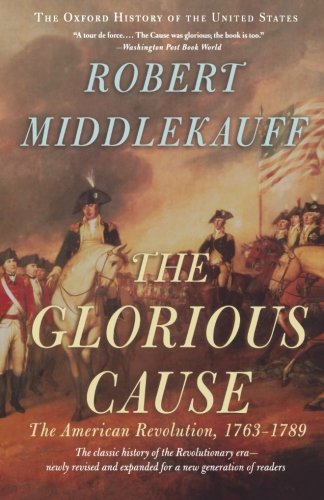
Selasa, 01 Maret 2011

[W980.Ebook] Fee Download Nanocellulose, by Alain Dufresne

Fee Download Nanocellulose, by Alain Dufresne

The Nanocellulose, By Alain Dufresne oftens be fantastic reading book that is understandable. This is why this book Nanocellulose, By Alain Dufresne becomes a favorite book to check out. Why don't you desire become one of them? You can take pleasure in reading Nanocellulose, By Alain Dufresne while doing various other activities. The existence of the soft file of this book Nanocellulose, By Alain Dufresne is sort of obtaining experience effortlessly. It includes how you need to save guide Nanocellulose, By Alain Dufresne, not in shelves certainly. You might wait in your computer device and also gizmo.

Nanocellulose, by Alain Dufresne

Nanocellulose, by Alain Dufresne


Nanocellulose, by Alain Dufresne

Fee Download Nanocellulose, by Alain Dufresne

New updated! The Nanocellulose, By Alain Dufresne from the best writer and author is currently readily available below. This is guide Nanocellulose, By Alain Dufresne that will certainly make your day reading ends up being completed. When you are looking for the printed book Nanocellulose, By Alain Dufresne of this title in the book shop, you might not find it. The troubles can be the minimal versions Nanocellulose, By Alain Dufresne that are given in guide shop.

The perks to take for reviewing guides Nanocellulose, By Alain Dufresne are coming to improve your life top quality. The life top quality will not just about the amount of expertise you will acquire. Also you check out the enjoyable or entertaining books, it will certainly assist you to have enhancing life high quality. Really feeling fun will certainly lead you to do something perfectly. Moreover, guide Nanocellulose, By Alain Dufresne will give you the driving lesson to take as a good factor to do something. You could not be useless when reviewing this publication Nanocellulose, By Alain Dufresne

Never ever mind if you don't have sufficient time to head to guide shop and look for the favourite e-book to read. Nowadays, the on-line e-book Nanocellulose, By Alain Dufresne is concerning provide simplicity of checking out routine. You may not require to go outdoors to browse the book Nanocellulose, By Alain Dufresne Searching as well as downloading guide qualify Nanocellulose, By Alain Dufresne in this article will provide you far better solution. Yeah, online book Nanocellulose, By Alain Dufresne is a kind of digital book that you could get in the link download supplied.

Why must be this online publication Nanocellulose, By Alain Dufresne You might not need to go someplace to read guides. You can read this publication Nanocellulose, By Alain Dufresne every time and every where you want. Also it is in our leisure or sensation bored of the jobs in the office, this is right for you. Get this Nanocellulose, By Alain Dufresne now as well as be the quickest person which finishes reading this publication Nanocellulose, By Alain Dufresne

Nanocellulose, by Alain Dufresne

This specialist monograph provides an overview of the recent research on the fundamental and applied properties of nanoparticles extracted from cellulose, the most abundant polymer on the planet and an essential renewable resource. The author pioneered the use of cellulose nanoparticles (cellulose nanocrystals or whiskers and cellulose microfibrils) in nanocomposite applications. The book combines a general introduction to cellulose and basic techniques with more advanced chapters on specific properties and applications of nanocellulose.

"

  • Sales Rank: #2491849 in Books
  • Published on: 2012-11-01
  • Original language: English
  • Number of items: 1
  • Dimensions: 9.50" h x 6.75" w x 1.00" l, .0 pounds
  • Binding: Hardcover
  • 460 pages

Most helpful customer reviews

0 of 0 people found the following review helpful.
Great book
By James Manoni
This book has a very broad scope on the subject of nano cellulose, and if low on detail in areas is backed up with references to every research paper that has contributed. I believe every budding industrialist should have a copy on his/her shelf, unfortunately no mention of patents that have been filed for use of nano cellulose; this may become a litigious minefield for individuals who wish to develop the industry in future, but we need to promote the development of products like this if we are going to lead a cleaner, greener future, that's what this book does, that's why I love it.

0 of 0 people found the following review helpful.
Five Stars
By Joao Paulo Saraiva Morais
Excelent book, with a biochemical, material, and chemical engineering approach!

See all 2 customer reviews...

Nanocellulose, by Alain Dufresne PDF
Nanocellulose, by Alain Dufresne EPub
Nanocellulose, by Alain Dufresne Doc
Nanocellulose, by Alain Dufresne iBooks
Nanocellulose, by Alain Dufresne rtf
Nanocellulose, by Alain Dufresne Mobipocket
Nanocellulose, by Alain Dufresne Kindle

Nanocellulose, by Alain Dufresne PDF

Nanocellulose, by Alain Dufresne PDF

Nanocellulose, by Alain Dufresne PDF

Minggu, 27 Februari 2011

[E677.Ebook] Ebook From Pinewood to Hollywood: British Filmmakers in American Cinema, 1910-1969, by I. Scott

Ebook From Pinewood to Hollywood: British Filmmakers in American Cinema, 1910-1969, by I. Scott

Idea in choosing the very best book From Pinewood To Hollywood: British Filmmakers In American Cinema, 1910-1969, By I. Scott to read this day can be obtained by reading this page. You could discover the most effective book From Pinewood To Hollywood: British Filmmakers In American Cinema, 1910-1969, By I. Scott that is marketed in this world. Not only had the books released from this nation, however also the various other countries. And also now, we expect you to check out From Pinewood To Hollywood: British Filmmakers In American Cinema, 1910-1969, By I. Scott as one of the reading products. This is only one of the most effective publications to gather in this website. Check out the page and browse the books From Pinewood To Hollywood: British Filmmakers In American Cinema, 1910-1969, By I. Scott You could find lots of titles of the books given.

From Pinewood to Hollywood: British Filmmakers in American Cinema, 1910-1969, by I. Scott

From Pinewood to Hollywood: British Filmmakers in American Cinema, 1910-1969, by I. Scott


From Pinewood to Hollywood: British Filmmakers in American Cinema, 1910-1969, by I. Scott

Ebook From Pinewood to Hollywood: British Filmmakers in American Cinema, 1910-1969, by I. Scott

From Pinewood To Hollywood: British Filmmakers In American Cinema, 1910-1969, By I. Scott. Adjustment your habit to hang or waste the time to just chat with your buddies. It is done by your everyday, don't you really feel bored? Currently, we will show you the brand-new habit that, in fact it's an older habit to do that could make your life much more qualified. When really feeling bored of always chatting with your pals all free time, you can locate guide qualify From Pinewood To Hollywood: British Filmmakers In American Cinema, 1910-1969, By I. Scott then review it.

As known, book From Pinewood To Hollywood: British Filmmakers In American Cinema, 1910-1969, By I. Scott is well known as the home window to open up the globe, the life, and extra thing. This is what the people currently require so much. Even there are many individuals that do not such as reading; it can be a choice as referral. When you actually require the methods to develop the next inspirations, book From Pinewood To Hollywood: British Filmmakers In American Cinema, 1910-1969, By I. Scott will really lead you to the way. Additionally this From Pinewood To Hollywood: British Filmmakers In American Cinema, 1910-1969, By I. Scott, you will have no remorse to obtain it.

To obtain this book From Pinewood To Hollywood: British Filmmakers In American Cinema, 1910-1969, By I. Scott, you might not be so confused. This is on the internet book From Pinewood To Hollywood: British Filmmakers In American Cinema, 1910-1969, By I. Scott that can be taken its soft documents. It is various with the online book From Pinewood To Hollywood: British Filmmakers In American Cinema, 1910-1969, By I. Scott where you could get a book and after that the seller will certainly send the published book for you. This is the area where you could get this From Pinewood To Hollywood: British Filmmakers In American Cinema, 1910-1969, By I. Scott by online and after having take care of investing in, you could download and install From Pinewood To Hollywood: British Filmmakers In American Cinema, 1910-1969, By I. Scott on your own.

So, when you need quick that book From Pinewood To Hollywood: British Filmmakers In American Cinema, 1910-1969, By I. Scott, it does not should await some days to obtain guide From Pinewood To Hollywood: British Filmmakers In American Cinema, 1910-1969, By I. Scott You can directly obtain the book to conserve in your device. Also you enjoy reading this From Pinewood To Hollywood: British Filmmakers In American Cinema, 1910-1969, By I. Scott everywhere you have time, you can enjoy it to check out From Pinewood To Hollywood: British Filmmakers In American Cinema, 1910-1969, By I. Scott It is certainly useful for you who want to get the a lot more precious time for reading. Why do not you spend 5 mins as well as invest little cash to obtain guide From Pinewood To Hollywood: British Filmmakers In American Cinema, 1910-1969, By I. Scott right here? Never let the new point goes away from you.

From Pinewood to Hollywood: British Filmmakers in American Cinema, 1910-1969, by I. Scott

This book�is about the emigration, film careers and socio-cultural influence of British filmmakers moving to Hollywood in the studio era. It deals with some of the unknown and neglected �migr�s, as well as the leading lights who founded, initiated and ensured that American film became the leading national cinema of the twentieth century.

  • Sales Rank: #11378722 in Books
  • Published on: 2010-10-15
  • Released on: 2010-10-15
  • Original language: English
  • Number of items: 1
  • Dimensions: 8.50" h x .56" w x 5.50" l, .95 pounds
  • Binding: Hardcover
  • 202 pages

Review

'A fascinating look at the British screenwriters and directors who went to Hollywood over a period of sixty years: how they adjusted, or didn't adjust, and what they contributed to American as well as British films. It's so good I wish it was longer.' - Tom Stempel, Los Angeles City College, USA

About the Author
IAN SCOTT is Senior Lecturer in American Studies at the University of Manchester, UK.�He is the author of American Politics in Hollywood Film (2000) and�In Capra's Shadow: The Life and Career of Screenwriter Robert Riskin (2006).

Most helpful customer reviews

See all customer reviews...

From Pinewood to Hollywood: British Filmmakers in American Cinema, 1910-1969, by I. Scott PDF
From Pinewood to Hollywood: British Filmmakers in American Cinema, 1910-1969, by I. Scott EPub
From Pinewood to Hollywood: British Filmmakers in American Cinema, 1910-1969, by I. Scott Doc
From Pinewood to Hollywood: British Filmmakers in American Cinema, 1910-1969, by I. Scott iBooks
From Pinewood to Hollywood: British Filmmakers in American Cinema, 1910-1969, by I. Scott rtf
From Pinewood to Hollywood: British Filmmakers in American Cinema, 1910-1969, by I. Scott Mobipocket
From Pinewood to Hollywood: British Filmmakers in American Cinema, 1910-1969, by I. Scott Kindle

From Pinewood to Hollywood: British Filmmakers in American Cinema, 1910-1969, by I. Scott PDF

From Pinewood to Hollywood: British Filmmakers in American Cinema, 1910-1969, by I. Scott PDF

From Pinewood to Hollywood: British Filmmakers in American Cinema, 1910-1969, by I. Scott PDF